


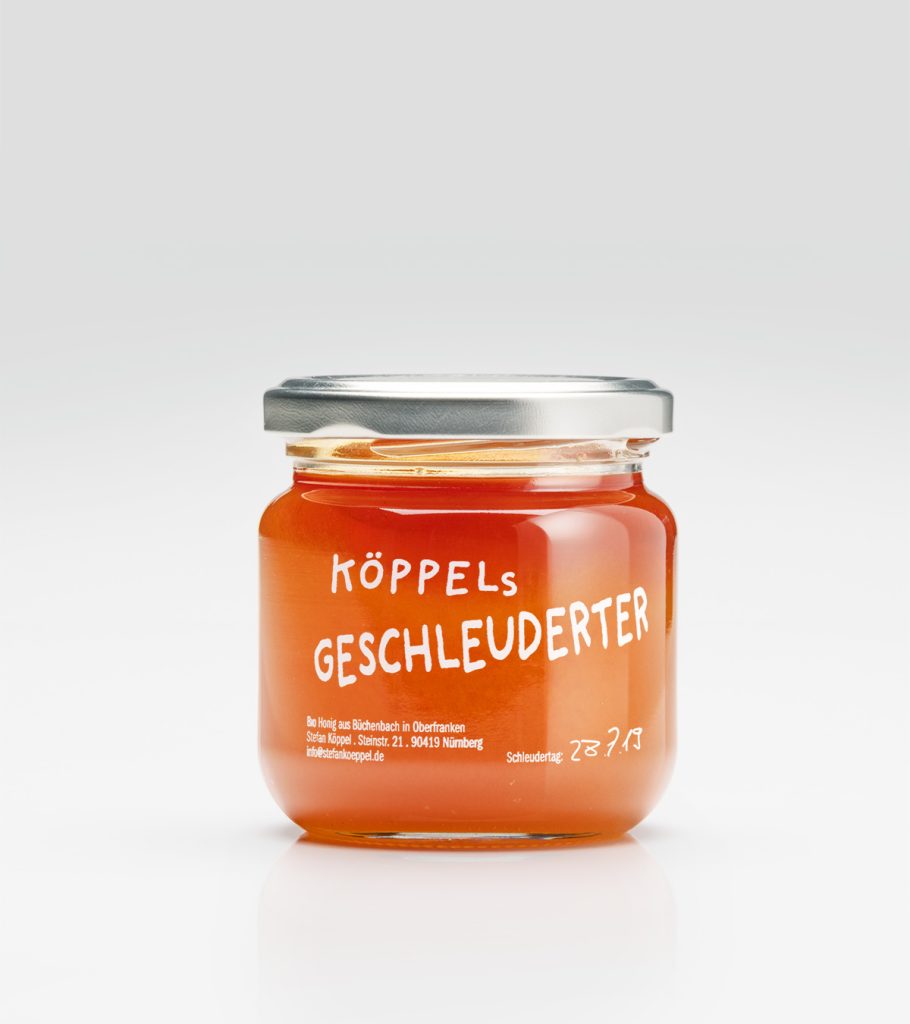
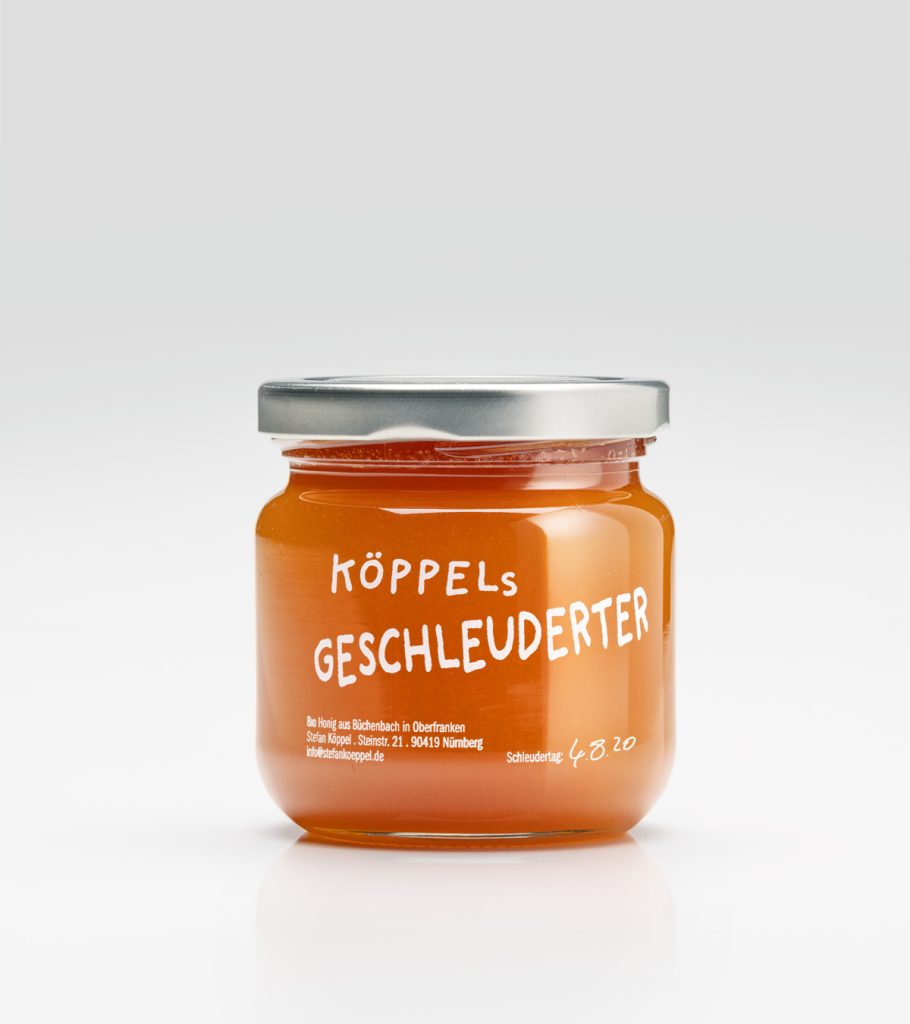
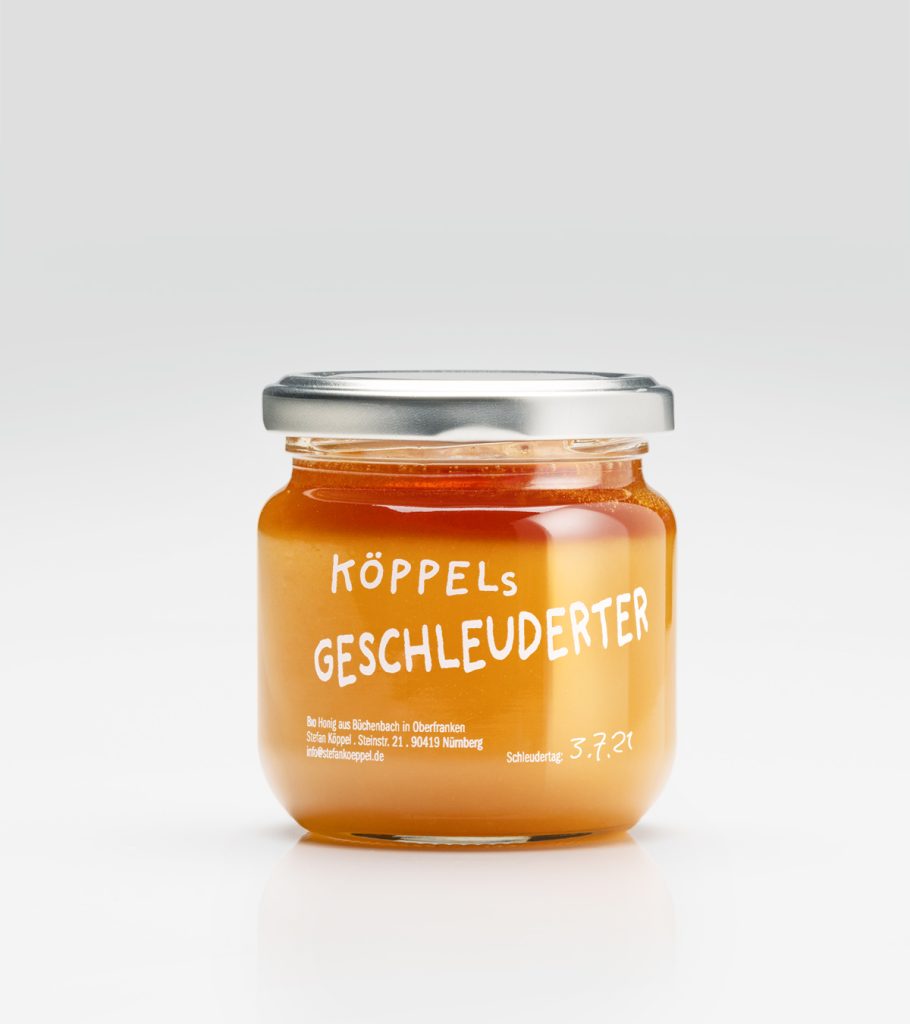
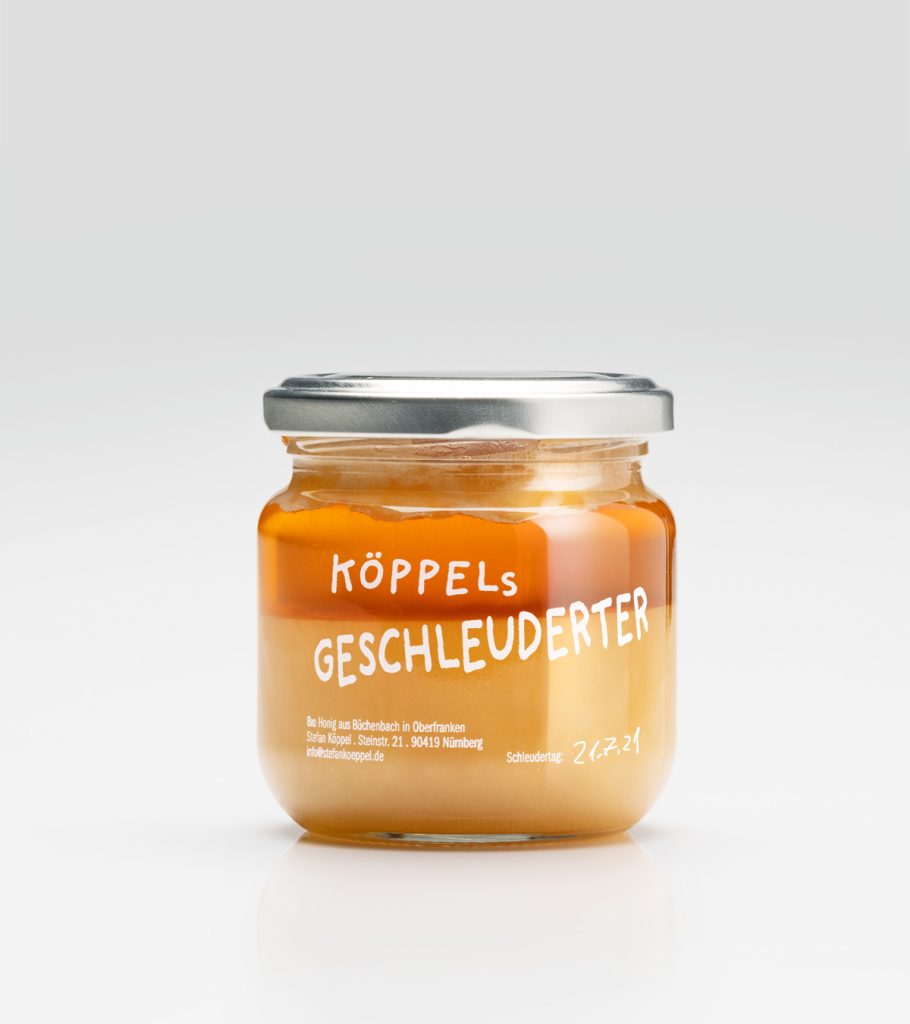
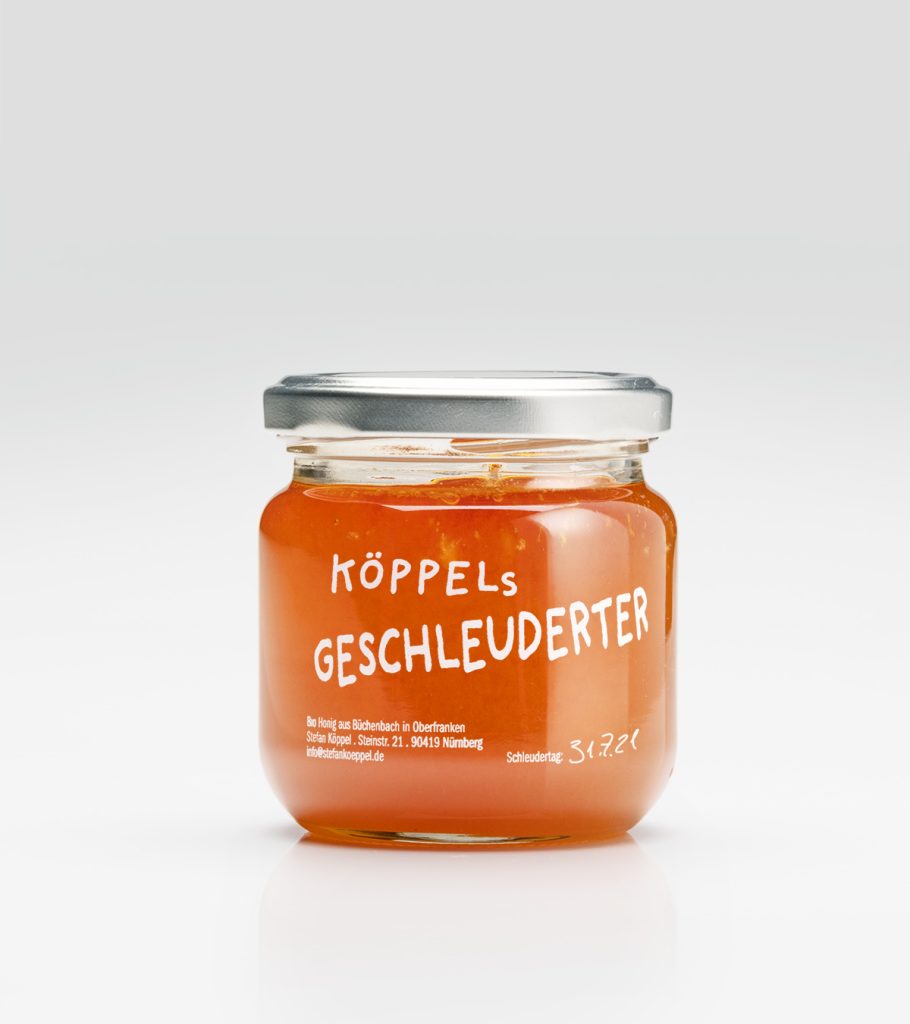
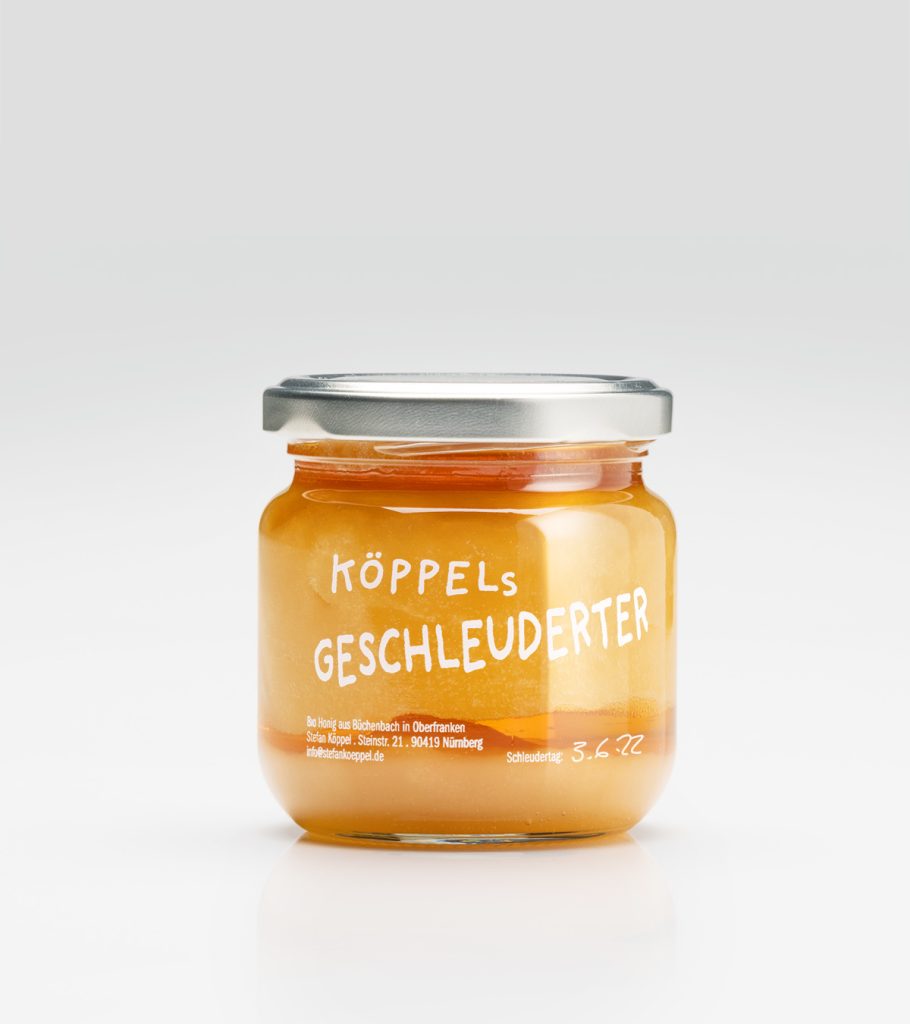
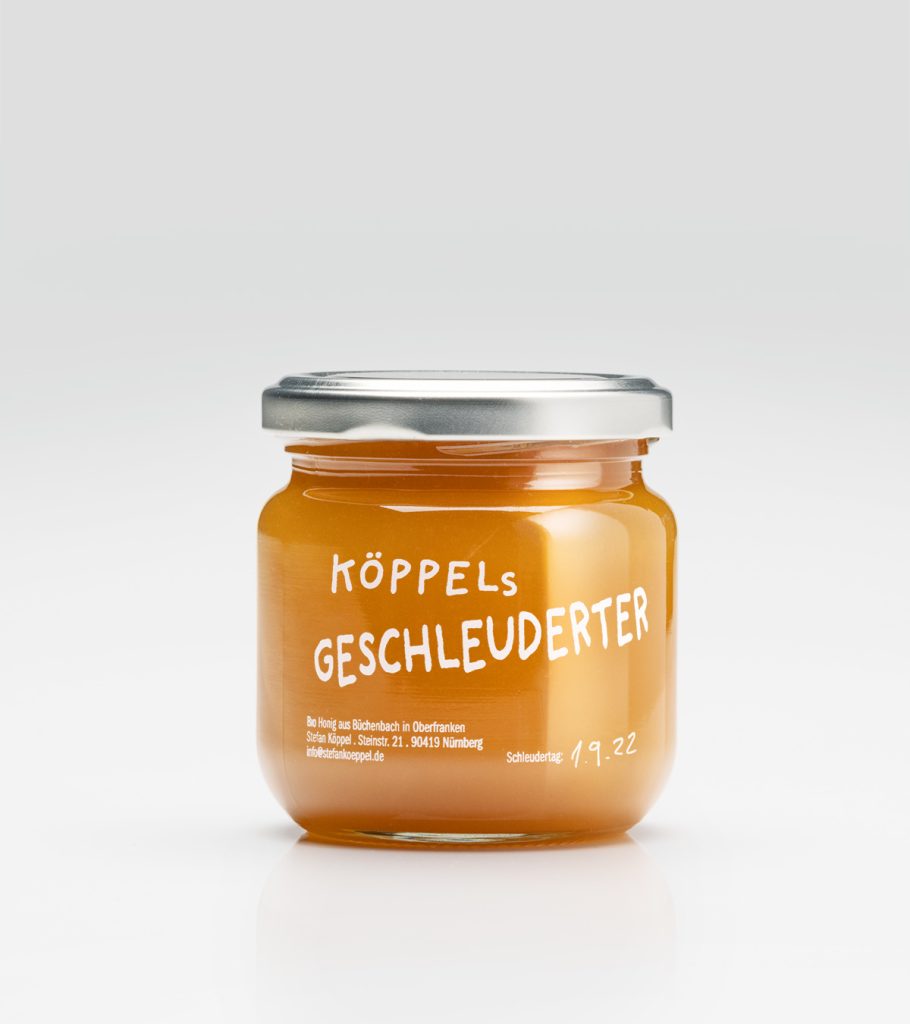
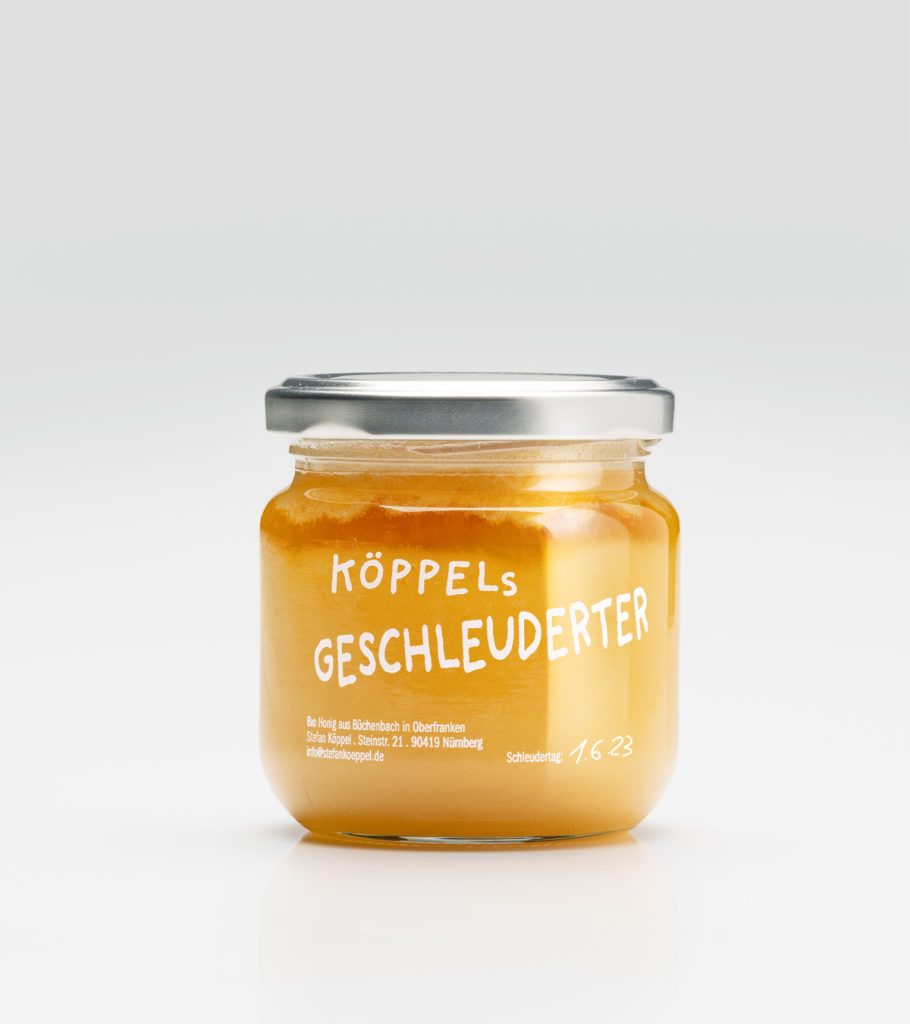
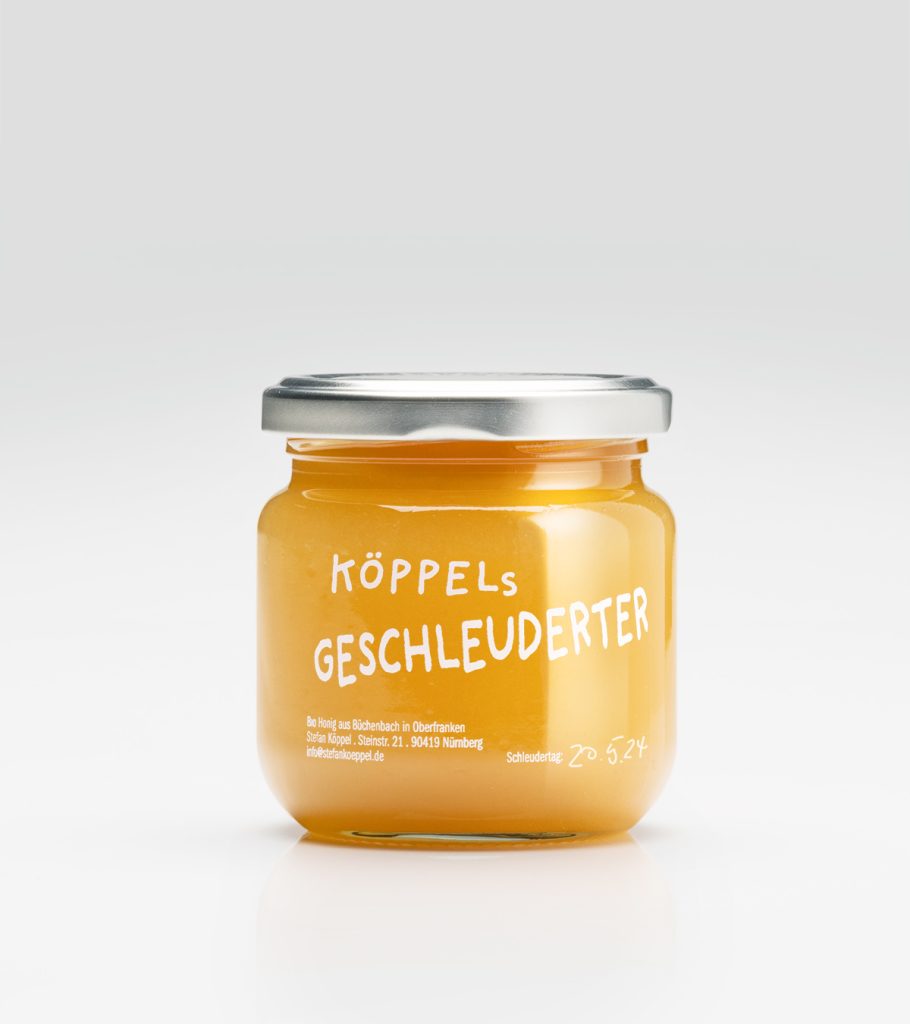
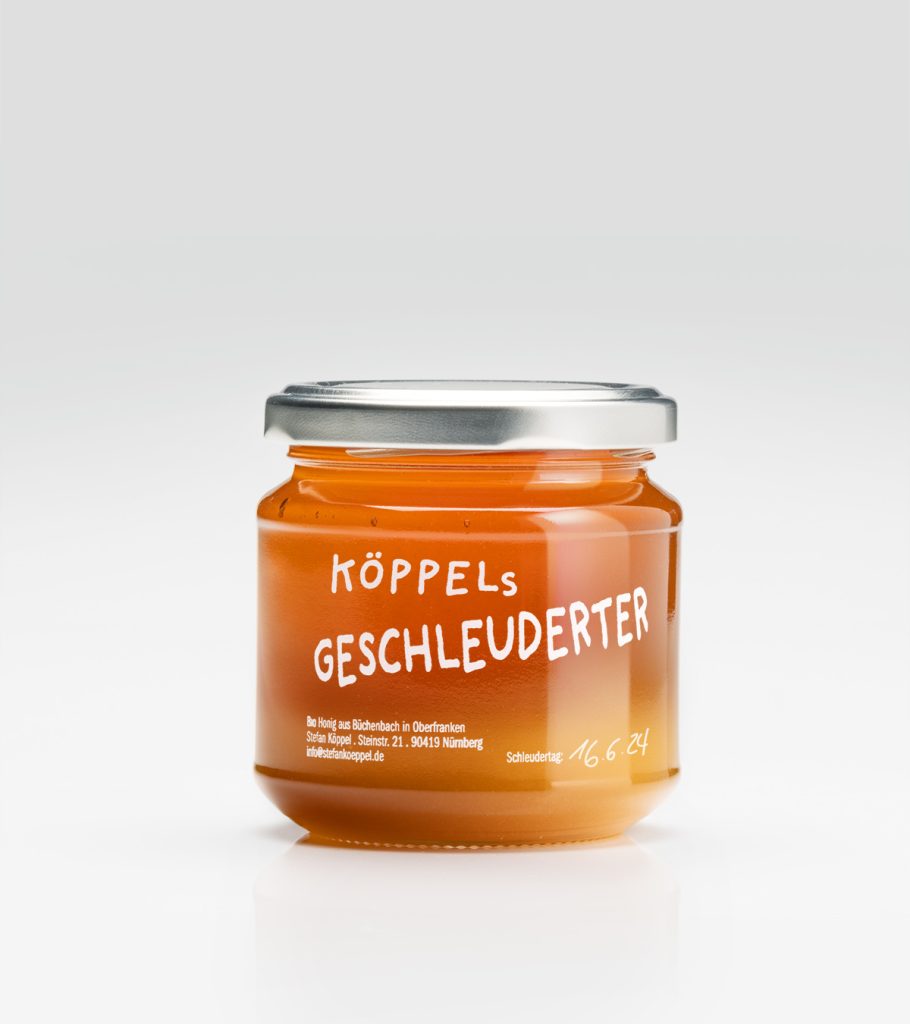
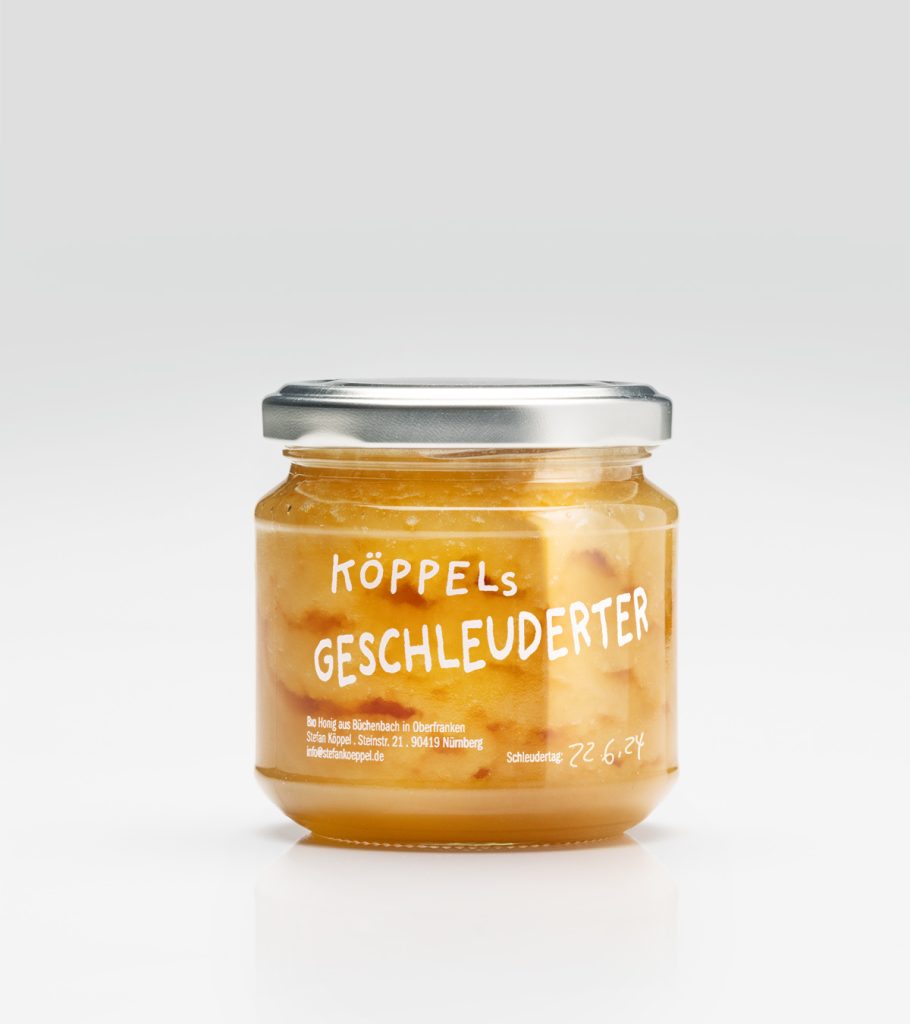
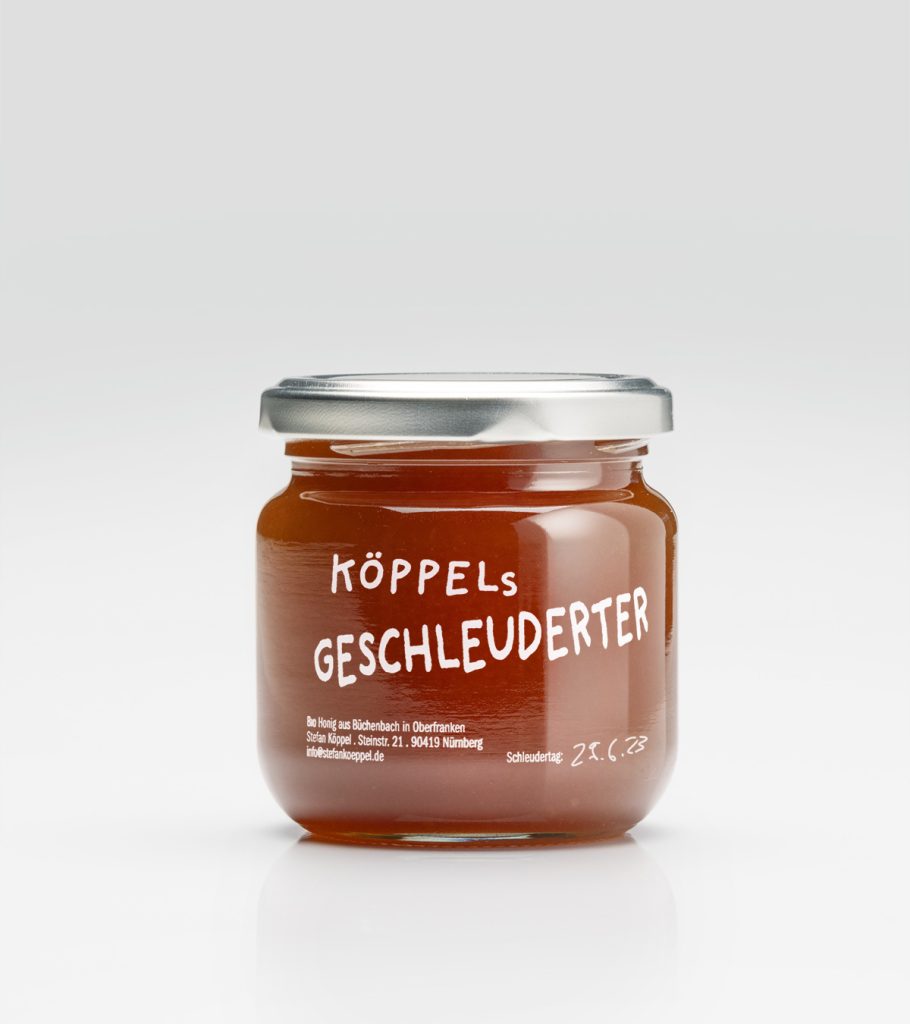
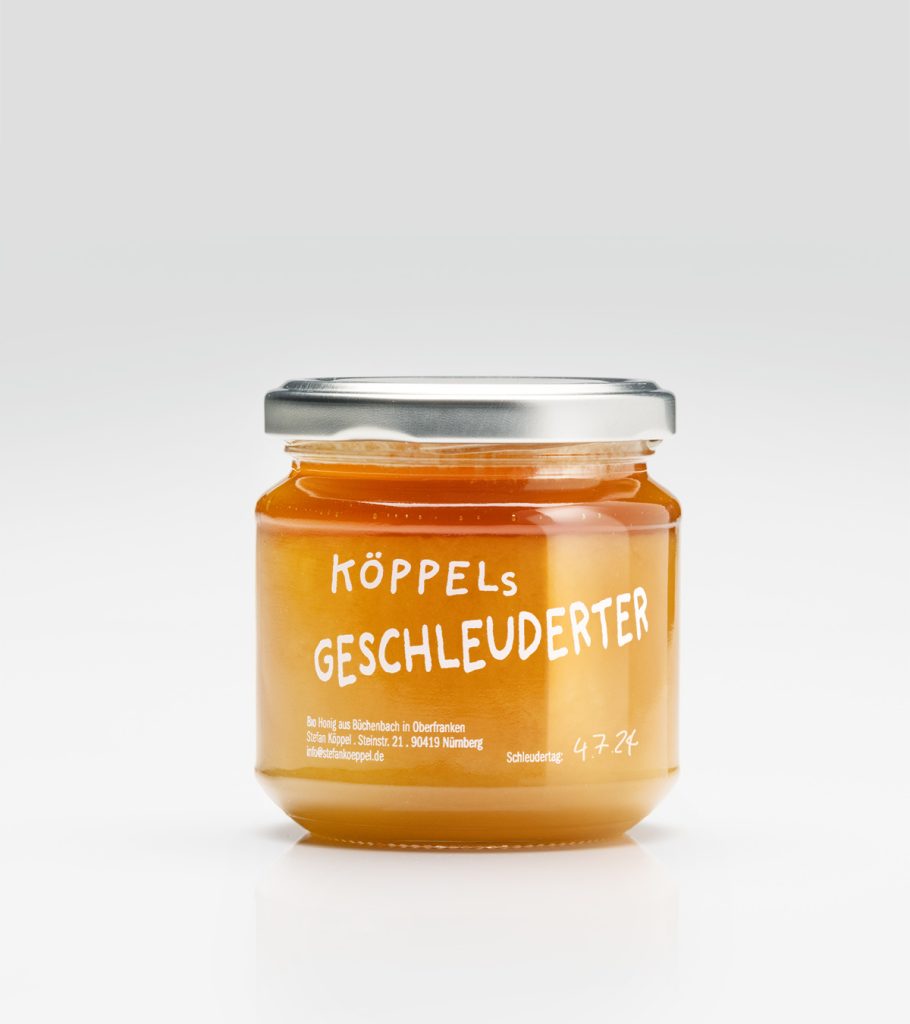
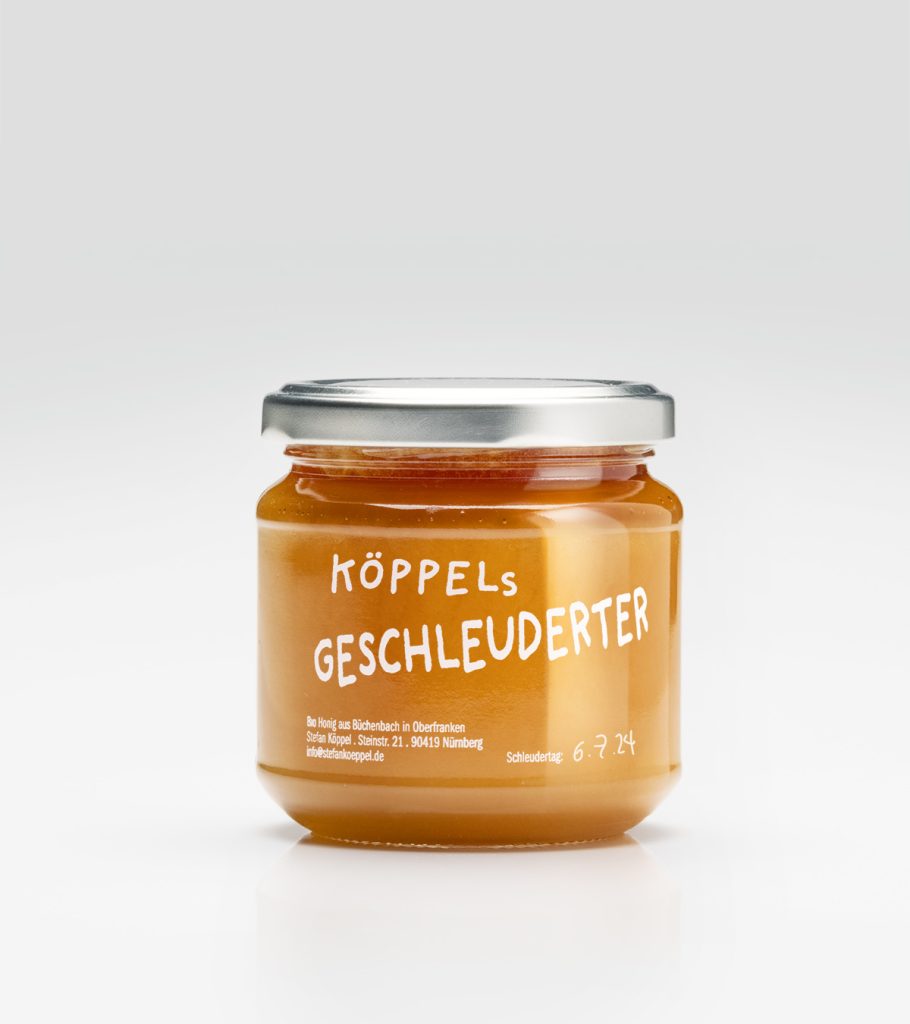
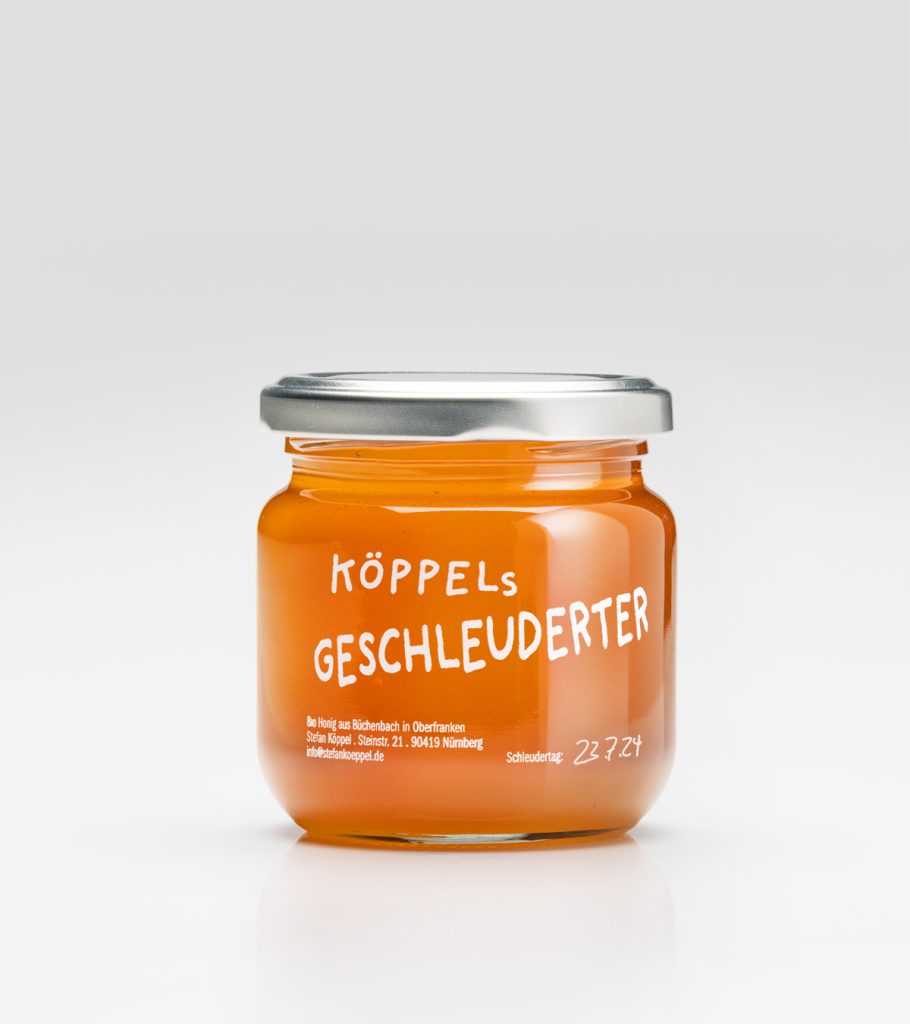
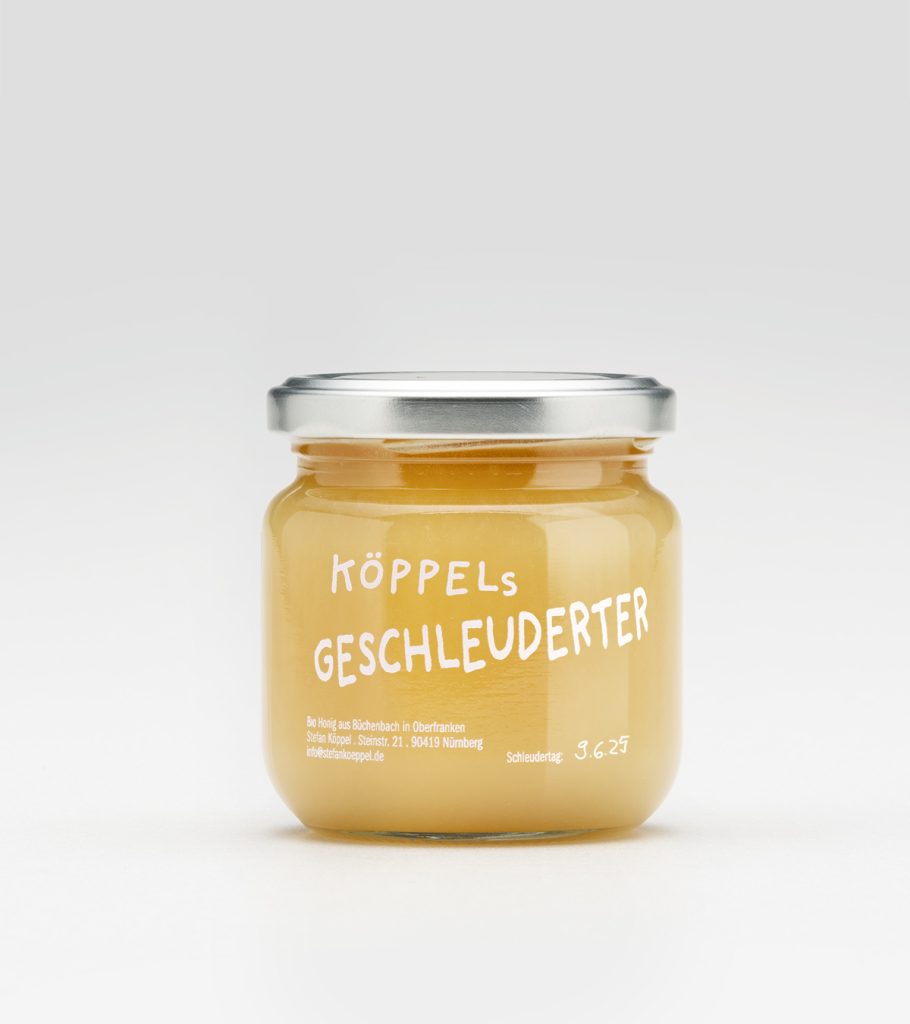
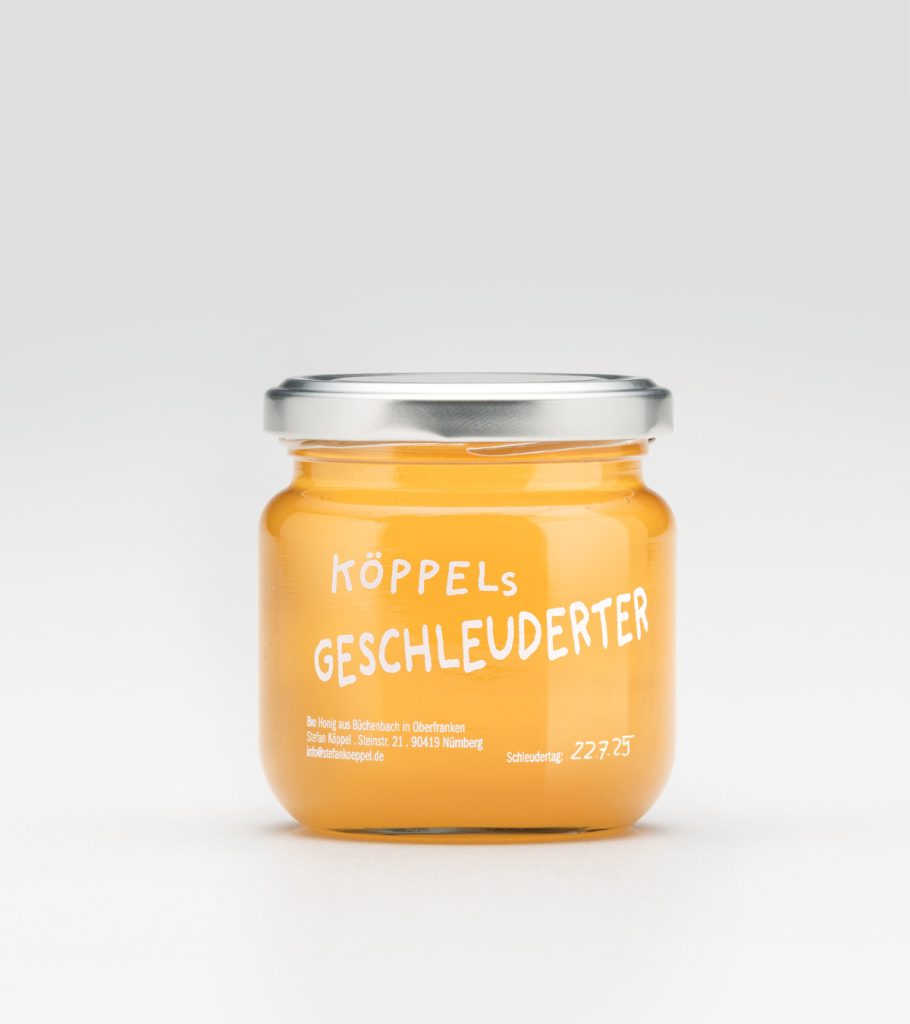
<< Swipe for my different honeys >>
FAQs about honey
Why do the honeys look different?
My honeys come from bee colonies that live in a fixed location. This location, Büchenbach near Pegnitz, is characterized by sustainable agriculture and a diverse plant world. This provides the bees with a large number of different blossoms from flowers, shrubs, forest and fruit trees throughout the year. In addition, a healthy mixed forest is the basis for the amount of forest honey.
Basically, there are a variety of honey types that differ in taste and color.
Blossom honey is made from the nectar of flowers. The specific flowers visited by the bees determine the taste and color of the honey. Acacia honey, for example, is mild and sweet, clear to light yellow. Lime blossom honey is fresh and minty, light yellow to greenish. Dandelion honey is aromatic and tart, dark yellow to orange.
In contrast to blossom honey, forest honey is collected from the excretions, the honeydew, of plant lice living on trees. This type of honey often has a strong, spicy and malty taste and a darker color.
The two honeys also differ in composition: Forest honeys have a wider range of sugars than blossom honeys, which consist largely of the two simple sugars glucose (grape sugar) and fructose (fruit sugar). Forest honeys have a lower proportion of glucose than blossom honeys, which is why they do not crystallize as quickly as blossom honeys.
In some years, it makes sense to extract the honey several times for the benefit of the bee colonies. This leads to different types of honey being brought together and mixed. These different types of honey can then separate again after bottling in the jar. When the glucose (grape sugar) crystallizes, these crystals sink and form a lower layer, the upper layer then consists mainly of fructose (fruit sugar).
Why does the consistency of honey change with time?
Honey changes over time. On the one hand, it becomes solid because it consists of different types of sugar, especially glucose and fructose. The main reason for crystallization is the high content of dextrose (glucose), which tends to form crystals, while fruit sugar (fructose) helps honey to remain liquid. Honeys with a higher proportion of glucose, such as rapeseed or lime honey, crystallize faster than those with more fructose, such as acacia or forest honey.
Crystallization is a natural process and not a sign of poor quality or age of the honey. It occurs when the sugar concentration in the honey exceeds a certain threshold and the sugar molecules begin to combine and form crystals. The speed of crystallization also depends on storage; cooler temperatures promote this process.
If you do not want to consume the honey in its crystalline state, it is possible to liquefy it again and stir it.
Important! Do not heat honey above 104 degrees fahrenheit, otherwise its “healing” properties will be lost.
The water bath method involves heating water in a small pot to a maximum of 104 degrees fahrenheit. Then place the jar of honey in the warm water bath and leave it there. To speed up the process, stir the honey occasionally. This method is gentle and preserves the honey’s valuable nutrients. For the oven method, preheat the oven to a maximum of 104 degrees fahrenheit. Then place the jar of honey in the oven for about 10 minutes, stirring occasionally. However, this method can be risky as older ovens are often inaccurate and can overheat the honey. The radiator method is very simple, but takes time to liquefy the honey. Simply place the jar of honey on a radiator and leave it there for a few days.
What is the shelf life of honey?
The official best-before date (BBD) for honey is usually two years after bottling. This recommendation is based on legal requirements and the experience of beekeepers.
However, honey can be kept for well over three years if stored in ideal conditions. Honey has even been found that was over 3,000 years old and still edible, even though it was no longer aromatic.
To maximize the shelf life of honey, the following storage conditions should be observed:
Store in the dark, as light can damage the enzymes in honey, causing it to lose important properties.
As honey attracts moisture, it should be stored in an airtight container and protected from moisture.
Improper storage can lead to fermentation. Fermenting honey is not harmful to health and can still be used in many cases.
Ideally, honey should be stored at temperatures below 59 degrees fahrenheit. Higher temperatures can cause the honey to separate or ferment.
The best-before date: Honey is often still edible even after the best-before date, as long as it has been stored correctly. The high sugar content and low water content prevent the growth of microorganisms.
To summarize, honey can be kept almost indefinitely if stored correctly, although the recommended best-before date of two years is a useful guide.
My honey has a white foamy top layer, and what is that?
There are several procedural reasons for this. During honey extraction and processing, air can get into the honey. This happens, for example, when the honey is extracted from the combs, when the honey is sieved and when the honey is “stirred until creamy”. During subsequent storage, natural particles can rise in the honey. These then form a thin layer of foam. This honey foam consists of tiny air bubbles trapped in the honey, wax particles, pollen and natural impurities.
Contrary to what many consumers believe, honey foam is not a sign of inferior quality.
On the contrary, the foam contains concentrated honey flavors and is considered a delicacy by some beekeepers. The presence of foam can even be regarded as proof of the quality of unadulterated honey. It is important not to confuse honey foam with fermenting honey. Fermenting honey has a typical fermenting odor, while high-quality honey foam has a pleasant scent.
My "Spinned Spirit"
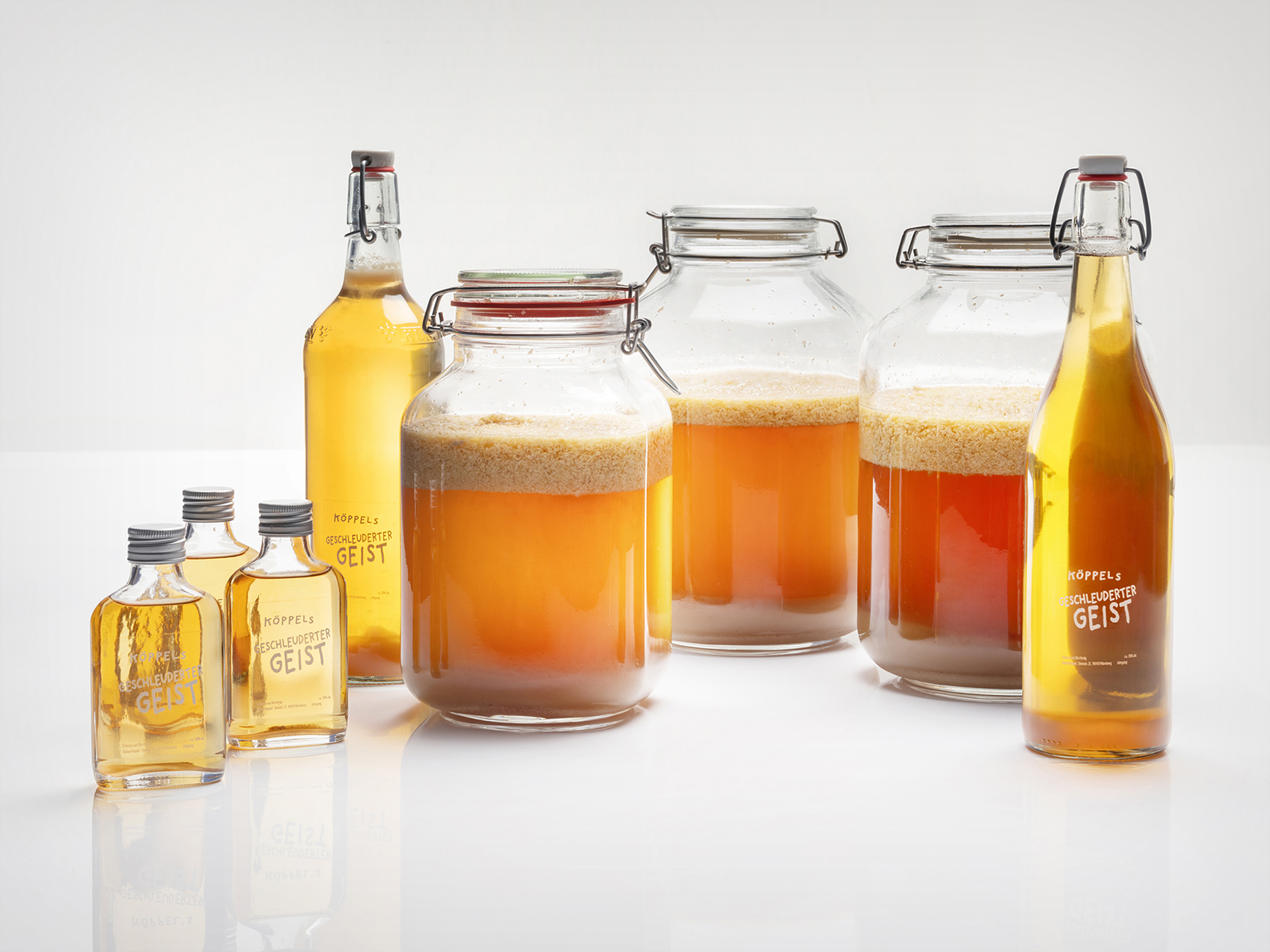
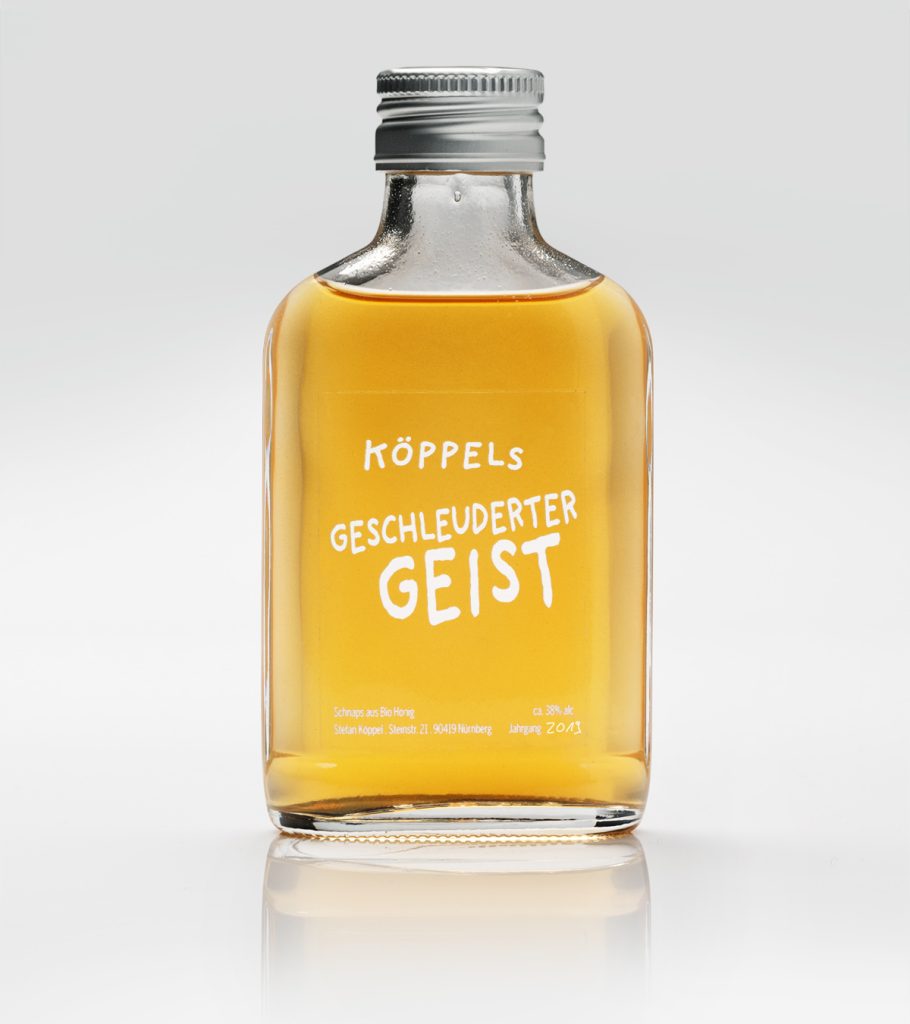
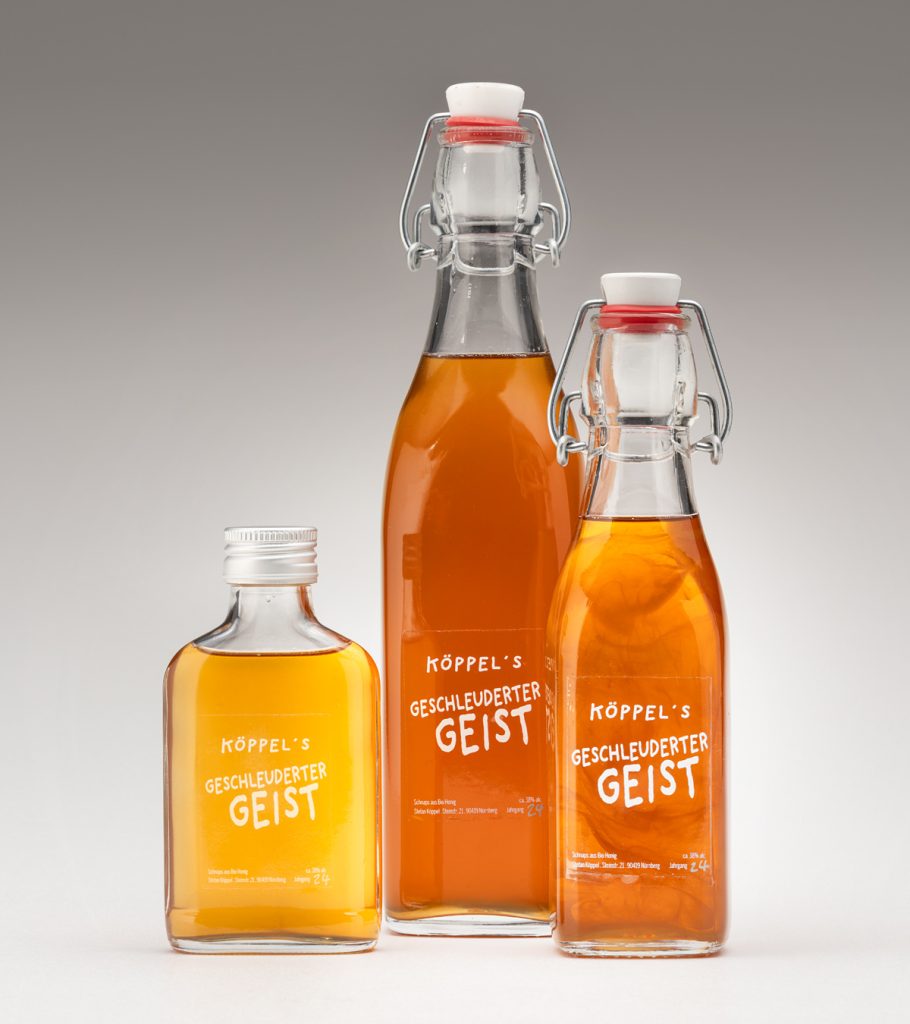
My “Spinned Spirit” is a mixture of honey, uncapping wax and 96.4 percent pure, tasteless wine spirit. This mixture matures for at least 6 months, with regular mixing, in large preserving jars. This gives the alcohol enough time to extract the important aromas from the beeswax and honey. The mixture is then filtered to remove the solid wax components and diluted with water to approx. 42% alcohol content. The honey spirit is then bottled with the addition of more honey for further maturation.
The result is a soft, digestible and intensely flavored honey spirit.
Where my bees are living
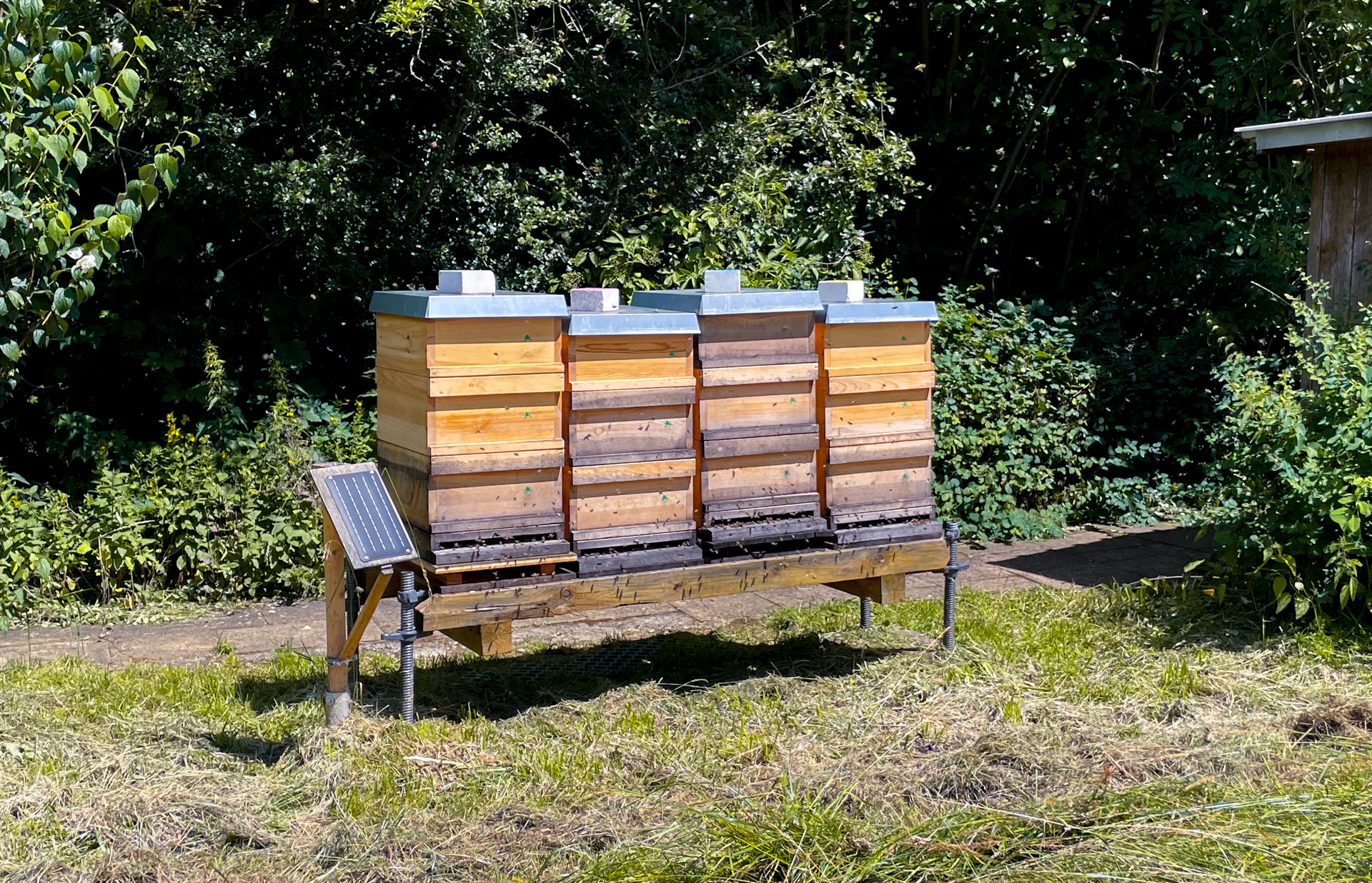
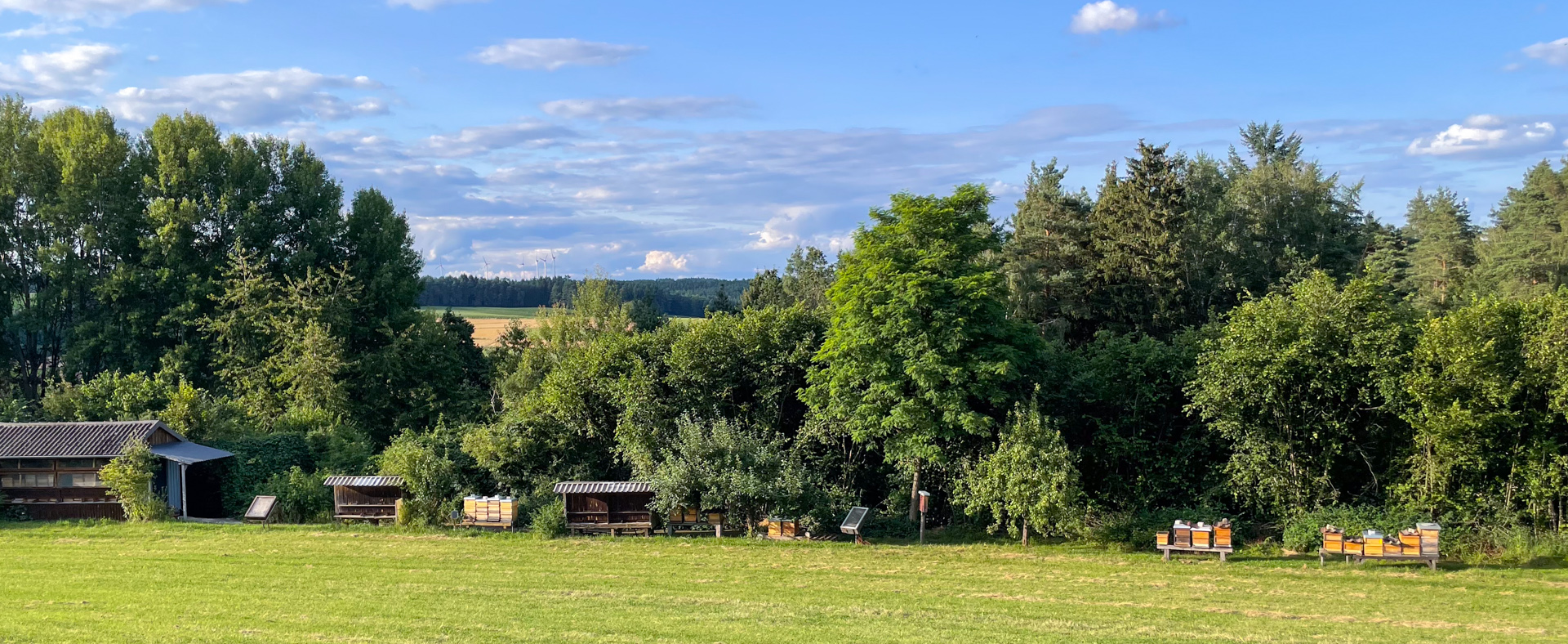
My beehives are located near Büchenbach, in the beautiful Upper Franconian countryside around Pegnitz. The surrounding area is characterized by sustainable agriculture and diverse nature with beautiful mixed forests. The location is on the private property of a good friend and experienced organic beekeeper, Anton Herzing.
I monitor the condition of my bees with sensors and scales. This data is available to me online at all times. This helps me to react quickly to unexpected changes in the bee colonies.
By analyzing the data, it also helps me to better understand the relationships between climatic changes and nature and the bee colonies.
Working with and on the bees is like therapy for body and mind.
The bees force you to slow down your rhythm and focus at the same time. Your own behavior is transferred to the bees and vice versa.
When they are doing well, my bee colonies are very calm and allow me to work with them without beekeeper protection. And if you do get stung, it’s good for your immune system 😀
I see myself as a beekeeper with the task of focusing on the well-being of the bees. This includes providing the bees with a clean, safe and pollutant-free environment. One of the most important tasks is to keep the beeswax, the space in which the bees live, clean. Bees grow from eggs to larvae in the beeswax. As the wax also cleans and changes the bees‘ food source, honey, the beeswax of my bee colonies is only renewed in a closed cycle.
The honey yield is not my main focus and is more of an exciting accessory